Two M160s, a stairwell and a Binson: the Levee drums
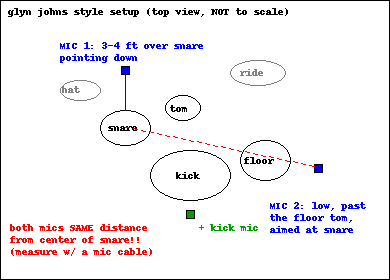
The version everyone knows goes like this. December 1970, Headley Grange, John Bonham’s brand new Ludwig kit set up at the bottom of the stairwell, and engineer Andy Johns hanging two Beyerdynamic M160s a couple of floors up. All true, but it leaves out the part Johns himself kept bringing up.
He ran the two mics through a pair of limiters (Vintage King’s write-up says they were Helios F760s in the Rolling Stones’ mobile truck) and then sent the drums through Jimmy Page’s Binson Echorec. In his MusicRadar interview he’s pretty blunt about where that lurching “ga-gack” comes from: “It was the Binson that made him sound like that.”
The song was also recorded at a different speed and slowed down afterwards, which goes a long way toward explaining why the whole track feels like it’s wading through mud. Rick Beato made a video a while back arguing the stairwell gets more credit than it deserves. His comments section did not take it well.
Why the M160? It’s a double-ribbon hypercardioid that’s been in production since 1952. The tight pattern means a pair hung high picks up the kit and the space without turning to mush, and it’s dark enough that the cymbals don’t get nasty once you start leaning on a limiter.
Trying it at home
You don’t need a stairwell. Put one mic well away from the kit (a hallway works), hit a limiter hard enough that you can hear it breathe, and print a short tape-style echo underneath. Then play slower and heavier than feels right. Johns said it himself: for the rest of it, you really need Bonzo.
Watch and read
- MusicRadar: Andy Johns on the Levee drum sound
- MusicRadar: Andy Johns on recording Led Zeppelin IV
- Vintage King: Recreating the Levee drums, with video
- Diffuser: Chad Smith and Roger Taylor play the Headley Grange stairwell
- Wikipedia: Beyerdynamic M 160